Value Engineering: How to Build and Renovate for Maximum ROI
With construction costs and labor remaining flat but elevated in 2026, developers and investors have to be incredibly smart about how they allocate their capital. This is where value engineering comes in.
Value engineering is not about "cutting corners." Instead, it is the strategic process of selecting materials, designs, and building systems that reduce upfront costs and long-term maintenance without sacrificing visual appeal or structural durability.
Whether you are building a new ground-up multifamily project with truHOME or upgrading a vintage value-add property, focus on these high-ROI design elements:
1. High-Impact, Low-Maintenance Surfaces
Inside an apartment, kitchens and bathrooms sell the unit. However, they also take the most abuse.
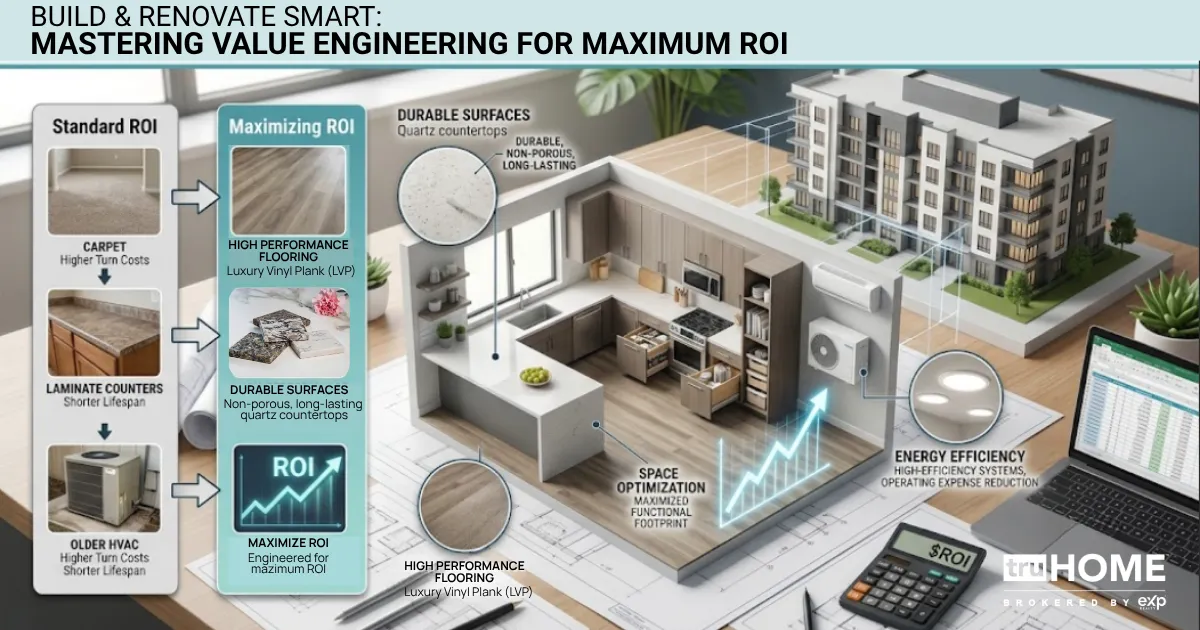
Quartz Countertops: While once considered a luxury, quartz has become the industry gold standard for multifamily projects. It is non-porous, highly resistant to staining and scratching, and never requires sealing. It provides a high-end look that attracts premium renters while eliminating the cost of frequent replacements.
Luxury Vinyl Plank (LVP) Flooring: Wood floors scratch and warp under tenant wear-and-tear, and carpet needs replacing almost every time a tenant moves out. Modern LVP offers the warm look of hardwood but is 100% waterproof and highly dent-resistant, saving you thousands of dollars in turn costs.
2. Space Optimization (Designing Compact Comfort)
National data shows that the average size of new multifamily units has declined to a record low median of 960 square feet. Renters are choosing smaller, more affordable footprints, but they still expect functional luxury.
Smart built-in storage, floor-to-ceiling kitchen cabinets, and open-concept living spaces make a 900-square-foot unit feel like 1,200 square feet.
By optimizing the footprint of each unit, you can fit more total income-producing units into the same building footprint.
3. Energy-Efficient Systems
Long-term operating expenses (OpEx) can quietly eat away at your cash flow. Installing energy-efficient heat pumps, LED lighting, and low-flow plumbing fixtures reduces utility bills (which is incredibly important if you pay for master-metered utilities) and appeals heavily to environmentally conscious renters.
At truHOME, our design-build process integrates value engineering from day one, ensuring your project balances beautiful aesthetics with realistic budgets and long-term durability.