The 2026 Energy Shift: Future-Proofing Your Investment Against Rising Costs
The 2026 Oregon Residential Specialty Code just changed the game. Are you building a "dinosaur" or a "day-one" modern asset?
If you’re building based on 2022 standards, you’re already behind. As of February 2026, Oregon has officially adopted more stringent energy codes aimed at "strategic electrification." For the investor, this isn't just a regulatory hurdle; it's a fundamental shift in how you calculate long-term NOI (Net Operating Income).
The Heat Pump Mandate and Efficiency
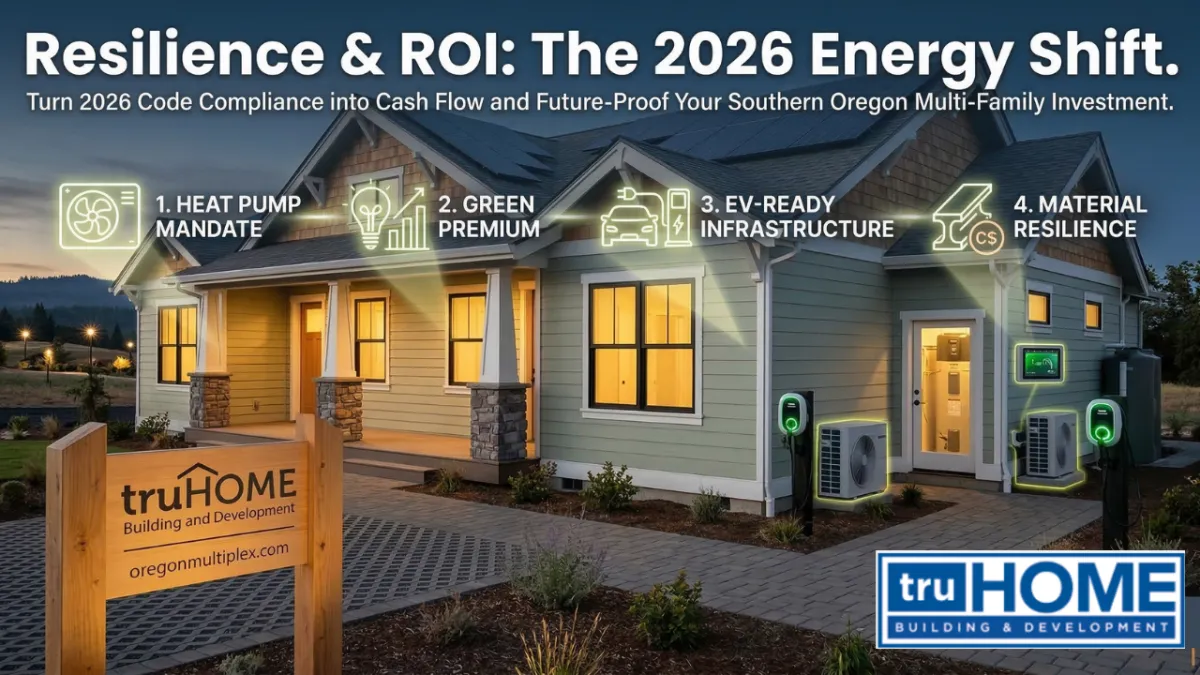
The biggest change in 2026 is the requirement for high-efficiency heat pump systems in new builds, moving away from traditional ducted air conditioning. While the initial capital expenditure (CapEx) for these systems is slightly higher, the long-term payoff is significant. Tenants in 2026 are facing utility bills that have risen nearly 50% since the start of the decade. A building that offers 27% higher energy efficiency isn't just a "nice to have"—it’s a major marketing advantage that reduces tenant turnover.
Rising Material Costs: The Copper and Concrete Reality
We are currently operating in a "post-inflationary" but "high-floor" cost environment. Tariffs on steel and copper in late 2025 and early 2026 have made traditional building methods more expensive. To maintain margins, investors must look at:
Alternative Materials: Using advanced framing techniques and composite materials.
EV Readiness: New 2026 codes require 20% to 50% of parking spaces to be EV-ready. Ignoring this now means a massive retrofit cost in five years.
Why truHOME? We are the premier builder in Southern Oregon because we treat your project like a business case, not just a construction site. We have established direct-to-manufacturer supply chains to mitigate tariff-driven price spikes, ensuring your project stays on budget while meeting the highest 2026 energy standards.