Re-Engineering Development Feasibility: Oregon’s SB 1521 and the Death of Unfunded Inclusionary Zoning
Inclusionary Zoning (IZ) policies were originally designed to incentivize affordable housing, but in practice, mandatory IZ often functioned as a heavy tax on new multifamily construction. In jurisdictions like Portland, mandatory affordable unit requirements caused many mid-scale and large-scale residential projects to stall or become financially unviable.
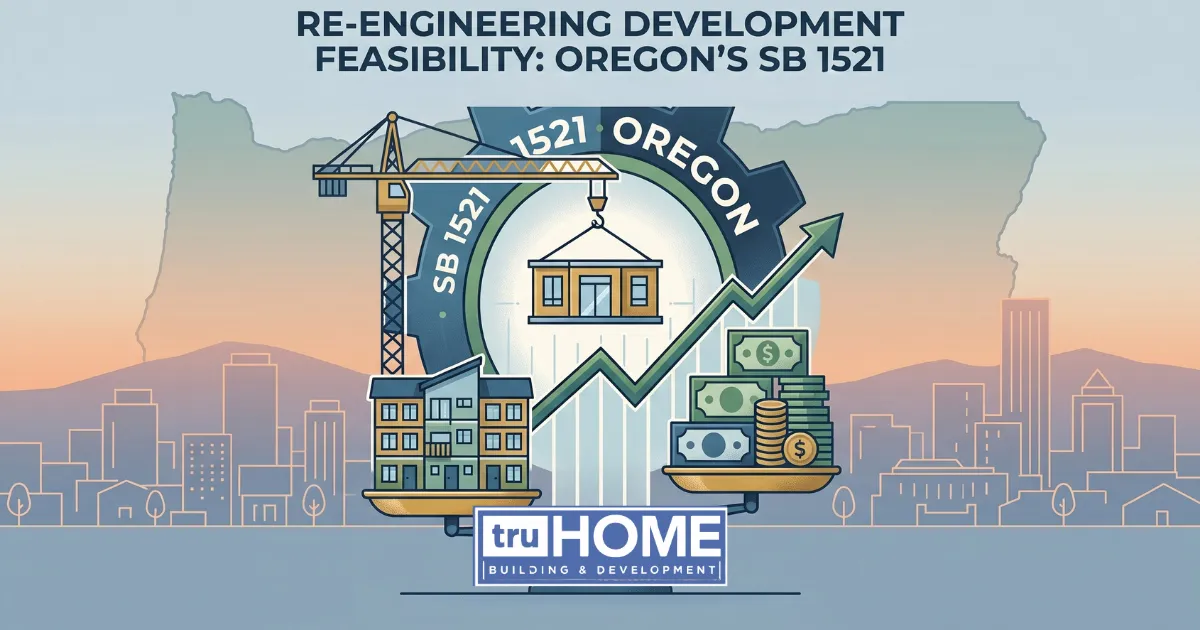
Recognizing that stifling production worsens housing affordability, the Oregon Legislature passed Senate Bill 1521 (SB 1521). This landmark legislation fundamentally alters the financial mechanics of real estate development in Oregon by mandating that local governments fully offset the financial burden imposed on developers by inclusionary zoning mandates.
Understanding SB 1521: What Changed?
Under Oregon’s previous framework, cities could mandate that developers set aside a percentage of new residential units (typically 10% to 20%) at below-market rents (60% to 80% AMI) for up to 99 years without providing equivalent financial compensation.
SB 1521 shifts this paradigm:
Mandatory Cost Offsets: Municipalities enforcing IZ rules must fully compensate developers for the revenue lost due to affordable unit mandates.
Flexible Relief Options: Localities can satisfy this offset requirement through direct cash payments, systemic System Development Charge (SDC) fee waivers, property tax abatements, or structural density bonuses.
Predictable Pro Formas: Investors no longer need to absorb the margin compression caused by uncompensated inclusionary mandates.
Why SB 1521 Is a Major Win for Real Estate Investors
Restored Pro Forma Viability: High interest rates and inflated material costs have made capital stack construction challenging. Restoring market-rate returns across unit mixes makes previously stalled projects financially viable.
Unlocking Municipal Incentives: Cities aiming to preserve inclusionary goals must offer substantial incentives—such as SDC fee waivers—which can save developers tens of thousands of dollars per unit upfront.
Leveling the Playing Field: SB 1521 creates clarity across municipalities in the Portland Metropolitan Statistical Area and beyond, preventing sudden regulatory shifts from undermining project capital.
How to Structure Investments Under the New Guidelines
Investors re-evaluating project pipelines in Oregon should adjust their strategy:
Audit Local IZ Offsets: Review municipal incentive packages. Cities providing dollar-for-dollar SDC waivers or tax freezes offer immediate cap rate enhancement.
Model Incentive Options: Run comparative sensitivity models evaluating full market-rate units versus subsidized units backed by municipal tax abatements.
Align with Turn-Key Developers: Navigating local code revisions requires a development partner who understands municipal offset structures and building efficiency.
The regulatory environment in Oregon is shifting back in favor of smart development. Partner with truHOME Building and Development to optimize your project pro forma, navigate local incentives, and construct high-yield multifamily properties. Discover our developer services today at www.oregonmultiplex.com.