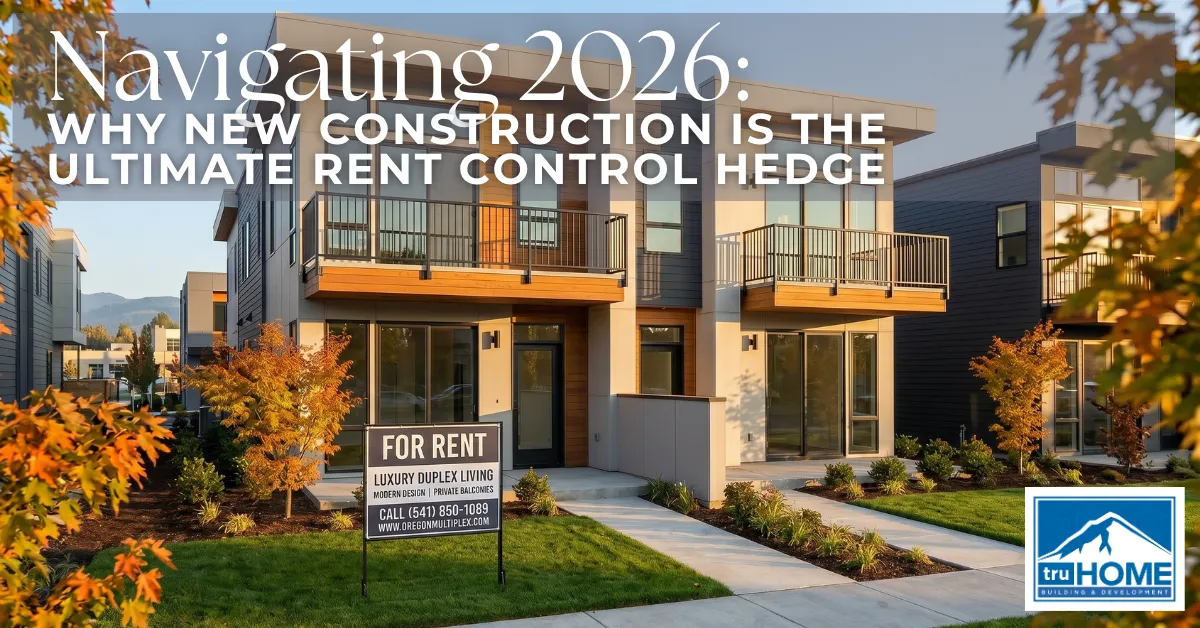
Navigating 2026: Why New Construction is the Ultimate Rent Control Hedge
Oregon’s statewide rent stabilization (SB 608) is a frequent topic of concern for investors. For 2026, the maximum allowable rent increase for stabilized properties is set at 9.5% (reflecting the 7% base plus the Consumer Price Index). While this regulation can squeeze margins on older "value-add" properties, it actually creates a significant competitive advantage for new construction.
The 15-Year Exemption
The most critical detail for investors to understand is the 15-year rolling exemption. Any building that has been issued a certificate of occupancy within the last 15 years is exempt from statewide rent caps. This creates a "Safe Harbor" for truHOME partners:
Uncapped Revenue Potential: While owners of older stock are legally restricted, your new build can follow market demand. This is particularly vital in high-growth corridors like Hillsboro or Bend, where market rents can outpace statutory caps.
Lower OpEx Stability: Rent control is a "revenue cap," which makes "expense creep" your greatest enemy. New builds feature modern systems, warranties, and high-efficiency envelopes that keep maintenance and utility costs predictable.
Premium Tenant Profiles: In a regulated market, the newest assets naturally attract the highest-quality tenants who are willing to pay a premium for modern amenities, EV charging, and better air quality.
By building new with truHOME, you aren't just adding units; you are adding "protected" revenue. Our builds are designed to be "Class A" assets that remain exempt from these caps for over a decade, providing you with the runway needed to maximize your internal rate of return (IRR).
Maximize your margins in a regulated market.
Find out why new construction is the safest bet in Oregon at www.oregonmultiplex.com.